AG Private · A private relocation office in Buenos Aires
Your move to Argentina, arranged privately.
One office plans your family's move to Argentina and carries it out: residency and citizenship, taxes and international structure, the home, the schools and the day you arrive.
Programs from USD 27,000 · by application · one in-house team
No denial of a citizenship or residency since we began in 2019 · offices in Buenos Aires, Wyoming and Curitiba · an in-house team of more than ten, including our legal director · English, Spanish, Portuguese and Russian
How it works
From application to arrival, in four steps.
You see the full scope and the full fee before anything is filed.
Application
Your family, your timing, your situation. One form, read personally.
Consultation
A one-hour call with Julieta and a confidential review of your case.
The Argentina Plan
A written plan, presented in a meeting, with a fixed quote for everything that follows.
Implementation and arrival
We file, coordinate and report weekly, receive you in Argentina and stay for a year.
The programs
A plan first, then its execution. Each for a fixed fee.
You see the full scope and the full fee before anything is filed. Families who need status in Argentina without the full move have a shorter program of their own.
Part I
The Argentina Plan
- A two-hour strategy session with Julieta Albornoz Gudiño
- The right route for each family member: citizenship by option, residency or naturalization
- A tax map: the date your Argentine tax residence begins and how it works with your home country
- Your international structure: a US LLC, or a company in Argentina, Brazil or Paraguay, and where to bank
- Housing, schools, healthcare and a timeline for the move
- A fixed quote for Part II
Part II
Implementation
- Every immigration filing for the family, through to the DNI and, for those whose route allows it, the passport
- Documents, apostilles and sworn translations
- Tax registration and first-year filings and, where it makes sense, a tax residency in Paraguay or another country that fits your plan
- Company formation and bank accounts, handled by our own team
- Arrival: airport, interim residence, house search, schools, health plan
- A dedicated English-speaking manager and twelve months of aftercare
Standalone
The Residency & Visa Program
- Entry check for every passport in the family: visa, electronic authorization or visa-free
- The right residency category for each person, and the consular or in-country filing
- Documents, apostilles and sworn translations
- Provisional residence, tax number and DNI, and the first renewal
- A travel calendar that protects the path to permanent residency and citizenship
- Citizenship by option for families with an Argentine-born parent
One fee, one in-house team. Legal, tax, notary, banking, relocation, real estate, customs and insurance are all handled by AG's own team under one fee. You deal with one office throughout, and nothing is quoted by the hour.
What is included
One office, every part of the move.
Eight areas of work, all carried out by AG's own in-house team.
Status
Residency, citizenship by option and naturalization, with every appointment attended alongside you.
Taxes
The date your tax residence begins, the personal-assets tax, coordination with your home country and, where it makes sense, a tax residency in Paraguay or another country that fits.
Structure
US LLC, companies in Argentina, Brazil or Paraguay, and banking that matches the plan.
Arrival
Airport reception with a driver, interim residence, house search, health plan, phone and driver's license.
Family
School search and applications, childcare, pets, household shipping and Spanish lessons for the whole family.
Documents
Apostilles, sworn translations and a check of every birth certificate before filing.
Aftercare
Weekly reports during the process and twelve months of support after your residency or citizenship is issued.
Discretion
A small named team handles your file. Nothing is shared with anyone without your consent.
The journey
Twelve stages, one office. What each one involves.
This is the program in detail, in the order a family lives it. For a visa-exempt family the calendar usually runs: the Plan within a month of the first call; the move on the date you choose; provisional residence within weeks of filing and the DNI within months; citizenship by option three to six months after the documents are ready; naturalization after two years of residence. Citizenship by investment, announced by the Government in October 2026, will be offered through the same office as soon as the program opens. The rules quoted are those in force in October 2026; every plan is checked against the law on the day it is filed.
1The first conversationOne hour with Julieta: who is moving, when, and what you want from Argentina.
Most families arrive with a question they have carried for a while: could we live somewhere else, with room, good schools and a passport that travels well. The first conversation is one hour with Julieta Albornoz Gudiño. We ask who is moving, where you hold citizenship, income and assets today, how often you need to travel, and when you would like to be settled. We say plainly whether the program fits; when it does not, we say what does.
- Confidential. Nothing is filed, and nothing is shared with anyone outside AG.
- Useful to have at hand: the passports of everyone moving, a rough picture of income and assets, and your timing.
- Within two business days you receive a short note with the routes we see for each person and the fee for the Argentina Plan.
2The Argentina PlanA written plan in two to three weeks: a route per person, your tax date, the house, the schools, a fixed quote.
The Plan comes first, before anyone packs a box. It is a written document, presented in a meeting two to three weeks after a two-hour working session. It names a route for each member of the family, the date your Argentine tax residence would begin, the structure that will hold your business and investments, where you would live and which schools you would apply to, a calendar for the move, and a fixed quote for everything that follows. You decide with the whole picture in front of you.
- A route per person: citizenship by option, rentista, pensionado, work contract, family reunification, a company, or Mercosur nationality.
- A tax map drawn by our in-house tax team, for Argentina and for your home country, with the questions to settle before you move: what to sell, which structures to simplify, where to be domiciled.
- A calendar built around school admissions, the tax year-end and the dates your documents stay valid.
3DocumentsCertificates, apostilles and sworn translations, finished before you fly.
Every route rests on the same papers: birth and marriage certificates, apostilled at home, and criminal-record certificates from your country of nationality and from any country where you lived a year or more in the last three, the latter issued within the last three months and apostilled as well. Translations are made in Argentina by a sworn public translator and legalized by the translators' association; translations made abroad are not accepted. Your name must read the same on every page. Where it does not, we correct the record before filing rather than after an observation.
- American documents are apostilled state by state; our US office handles it, or guides you through your state's process.
- One shared folder and one checklist per person, so nothing expires while something else is pending.
- Children under sixteen need no criminal-record certificates.
4Visas and entryMost families arrive as visitors; where a visa is needed, the entry permit comes first.
Citizens of the United States, Canada, the United Kingdom, the European Union, Israel, Brazil, Russia, the Emirates and Qatar enter Argentina as visitors without a visa, normally for ninety days. For them there is no consular step: the family arrives, and we open the residency file online, in RaDEX, from inside the country. Where a passport needs a visa, Migraciones issues an entry permit first and the consulate converts it into a residency visa before travel; when the file is complete, this usually adds weeks rather than months, and the Plan's calendar allows for it.
- Since Decree 366/2025, foreigners entering Argentina declare the purpose of travel and must hold health cover for the stay (permanent residents are exempt). The family's cover is in place before you board.
- A visitor's stay can be extended once at Migraciones.
- Passports outside this list, including Chinese and Indian citizens who hold a US visa, have their own entry rules; the Plan states them per person.
- The digital nomad permit gives 180 days and no DNI, and does not count toward permanent residency or citizenship. We use it only as a bridge.
5The flight and the airportYour manager is waiting at Ezeiza; the interim apartment is ready.
Ezeiza is forty-five minutes to an hour from Recoleta outside rush hour. Your manager is waiting in the arrivals hall with your name and a car. The interim apartment is ready: keys on the table, a stocked kitchen, local SIM cards for everyone, and a note with the week's appointments. The first day is for sleeping, and a walk.
- A furnished interim residence for the first weeks, in the neighborhood you are considering, so the house search starts from the right street.
- Prepaid SIM cards and eSIMs are issued against a passport on the day of arrival; a postpaid line follows with the DNI.
- Argentina keeps one time zone all year, one to two hours ahead of New York; Aeroparque, on the river beside Palermo, serves domestic and regional flights.
6The homeRecoleta, Palermo Chico, Belgrano, the northern suburbs or beyond, shortlisted before you land.
Our relocation team shortlists homes before you land and walks them with you in the first week. Most families choose between the city and the northern suburbs, and the choice is also a school and an estate decision, as the stages below explain.
- Recoleta
The city's classic address: Parisian apartment houses, embassies and Avenida Alvear. - Palermo Chico and Barrio Parque
The most exclusive enclave inside the city, low-rise and quiet around the parks and MALBA. - Belgrano R
Where city families with children settle: tree-lined streets, houses and low buildings, schools within minutes. - Puerto Madero
New towers with round-the-clock security and river views. - Olivos, La Lucila, San Isidro
The riverside suburbs where most English-speaking schools are found. - Nordelta and Pilar
A master-planned lake city thirty to forty kilometers north, and the country-club and polo belt around the Universidad Austral. - Mendoza
Chacras de Coria, the wine-country village under the Andes, dry and sunny. - Patagonia and Córdoba
Bariloche on the lakes, two hours by air; the Sierras Chicas suburbs of the country's second city.
Premium family rentals are quoted in US dollars, usually for twenty-four months, with one month's deposit; under the rules in force since the 2023 deregulation, term, currency and indexation are agreed freely. Landlords ask for a local guarantee, which a foreign family normally replaces with an insurer's surety bond, arranged by us. Foreigners may buy urban property without residency: a tax number, documented origin of funds and a notary are what is required, purchases are priced and paid in US dollars, and from reservation to deed usually takes four to six weeks.
- Buyer's closing costs in the city, covering the notary, stamp duty and the broker, typically total five to eight percent of the price. The seller's former 1.5 percent transfer tax was repealed in 2024.
- Rural land is the one restricted asset: assume the limits on foreign ownership apply while the courts and Congress settle the matter.
- Utilities, building fees, insurance and staff are set up in your name before you move in.
7Schools, health and familyAdmissions planned around the March school year; a private health plan from the first day.
Argentine schools run from late February to mid-December with a winter break in July, and the leading bilingual schools decide places the year before entry, so the move is planned around admissions. Lincoln, the American international school in La Lucila, keeps a northern-hemisphere calendar, which can let a US family arrive mid-year without losing a grade, subject to the school's admission. St. Andrew's Scots School, St. George's College, Northlands and Belgrano Day School are the long-established bilingual schools with IB programs; German and French families have the Colegio Goethe and the Lycée Jean Mermoz. Northlands has a campus in Nordelta. We have no commercial tie to any school: we prepare the applications, and you choose.
Health care for expatriate families is private. A prepaid plan from one of the main insurers, OSDE, Swiss Medical, Galeno or Medicus, gives direct access at the upper plan levels to private hospitals such as the Hospital Italiano, Hospital Alemán, Hospital Británico, Hospital Austral and Fleni, usually without referral. We arrange it before you arrive, with international cover to bridge the first weeks where the insurer asks for the DNI first. Public hospitals have charged non-permanent residents for anything but emergencies since 2025, which is why the plan comes first.
- Dogs and cats enter without quarantine on an international veterinary certificate from the home country's veterinary authority, with a current rabies vaccination; a microchip is recommended but not required.
- Household effects enter duty-free for permanent residents and under a customs guarantee for temporary residents; we file through a customs broker.
- Spanish tutors come to the house. Domestic staff are registered from the first day under the special regime, with pension, health and accident cover.
8Residency and the DNIFiled online from inside the country: provisional residence in weeks, the DNI in months.
Each member of the family holds a residency of their own. Most of our families use the rentista route, for people who live on passive income from assets held abroad: rents, dividends, interest, pensions, royalties. Migraciones looks at the regularity of the income rather than at net worth. The legal floor is five Argentine minimum wages a month per adult applicant; we advise documenting about USD 1,500 to 2,000 a month per adult, because both the minimum wage and the exchange rate move during the process, and after approval the income must arrive each month in an Argentine bank account.
Other routes: a regular pension (pensionado); a work contract with an employer registered in RENURE; a company in Argentina; family reunification with an Argentine or with a resident; a degree program at a registered university; and, for Brazilians and other Mercosur nationals, nationality alone, with no income test. The provisional residence, the precaria, usually arrives within one to two weeks of filing and lets you live, work and study. The DNI usually follows within two to six months.
- Temporary residency is renewed yearly on proof that its basis still holds; permanent residency can be requested after three years, or two for Mercosur nationals.
- To keep a temporary residency, spend more than half of each year in Argentina.
- Each adult who applies as a rentista shows the income in their own name; minor children are filed under family reunification for the same term as the parent. Where a spouse is filed as a dependant instead, the Plan says so and why. We attend every appointment with you.
9Company and bankA company if you need one, and a bank file that explains where your money comes from.
A foreign entrepreneur does not need citizenship or permanent residency to own a company here. The three vehicles are the SAS, the SRL and the SA; the choice turns on who will manage the company and the capital you intend to show, not on cost. With model bylaws an SAS is registered in Buenos Aires within about a day; an SA requires a majority of directors domiciled in Argentina. Your tax number, the CUIT, can be issued against your passport and your Migraciones file before the DNI arrives, and a representative can obtain it while you are still abroad, which is how a purchase or a shareholding is prepared before you land.
Banks may open accounts for foreigners whose residency is in process and for non-residents; each bank sets its own file, and our team prepares and presents it. Residents hold savings accounts in pesos and in US dollars at the same bank, and dollars wired from your own accounts abroad are credited in dollars. Since April 2025 resident individuals buy dollars at the official rate through their bank without a monthly cap. One rule remains for individuals at the time of writing: whoever buys dollars through the bank signs a statement not to trade dollar-settled securities for ninety days.
- A rentista's declared income must arrive monthly in an Argentine account, so banking is sequenced from the first filing, as early as the bank's rules allow.
- A Wyoming or Delaware LLC keeps your US assets, accounts and contracts inside a US entity while you live in Argentina. It is not a shield from Argentine tax; our tax team maps its treatment before the move.
- When the Plan calls for Brazil, our Curitiba office sets up the residency or the company. Where it makes sense for the family, we also arrange a tax residency in Paraguay, whose system taxes only local-source income, or in another country that fits the plan. It is a tool for a specific situation, not a substitute: it does not change Argentine tax residence for anyone who lives in Argentina.
10TaxesYour tax residence has a start date; the first year is planned around it, here and at home.
You become an Argentine tax resident when you obtain permanent residency, or after twelve months in the country on temporary permits; absences of up to ninety days a year do not stop the clock. The residency category and the month of arrival therefore decide which 31 December is the first one declared, and the Plan names that date before you move. From then on Argentina taxes worldwide income, at progressive rates of 5 to 35 percent and a flat 15 percent on gains from foreign securities, with a credit for income tax paid abroad; and worldwide net assets each year under the personal-assets tax, at rates of up to one percent on 2025 holdings, falling by law to a single 0.25 percent from 2027, above an inflation-indexed exemption and a higher one for the family home.
There is no federal inheritance tax. The Province of Buenos Aires levies one and the City of Buenos Aires does not, which gives the choice between the city and the northern suburbs an estate dimension. Argentina gives no step-up in cost on arrival and has no exit tax, so appreciated positions are reviewed before the move. Peso deposits and Argentine government bonds are exempt from both taxes for residents.
- Argentina has more than twenty tax treaties in force, among them Brazil, the United Kingdom, Germany, Spain, Italy, France, Switzerland, Canada, Russia, China and the Emirates. There is none with the United States, which exchanges account information with Argentina under FATCA.
- American citizens keep filing at home wherever they live; Argentine income tax can generally be credited there; the personal-assets tax cannot.
- Registration with ARCA, the CUIT and the first year's returns are handled by our in-house tax team, which also coordinates with your adviser at home.
11Citizenship and the passportCitizenship by option for families with Argentine roots; naturalization after two years for the rest.
Argentina offers two doors today, and has announced a third. The children of a native-born Argentine hold a lifelong right to citizenship by option, with no age limit, no residency requirement and no renunciation; through a consulate it usually takes three to six months once the documents are ready, and it ends with the DNI and the passport. Every other adult may apply for naturalization after two years of continuous legal residence in any residency category; the digital nomad permit and tourist stays do not count. Under the current rules the two years are spent without leaving the country and the file goes to Migraciones; those who traveled go to the federal courts, where we have handled more than 650 citizenship files, appeals included, since 2019. Those rules are under review by the courts, and we plan each family's calendar around both outcomes rather than one.
In October 2026 the Government announced a citizenship-by-investment program. According to the announcement, the thresholds are a non-refundable contribution of USD 350,000 to the Treasury or the subscription of a USD 800,000 public bond, with additional amounts for a spouse and children and no prior residence required. No implementing resolution has been published, payment would not by itself secure approval, and the program rests on the same 2025 decree whose citizenship rules are now before the Supreme Court. Applications are expected to open before the end of the year; as soon as the program is open, it becomes one more route in this program, and we build no plan on it before then.
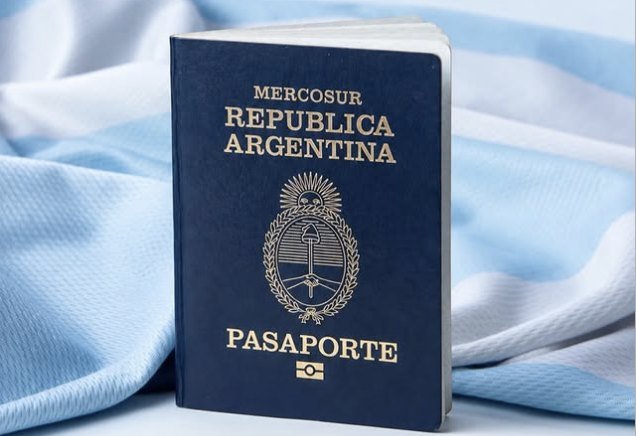
Argentina recognizes dual citizenship. On the Henley Passport Index of January 2026 the Argentine passport ranked 16th, with 169 destinations: the Schengen area, the United Kingdom and Japan without a visa, the United States still with one.
- Naturalization is for adults. The children of a naturalized parent have no right of option; they qualify in their own right from eighteen, after two years of legal residence of their own. A child born in Argentina is Argentine by birth.
- Citizens registered in Argentina between eighteen and seventy are required to vote; Argentines registered abroad vote only if they choose to.
- Argentine nationality by birth never expires, however long the documents have lapsed. Within Mercosur, Argentines travel on the DNI alone.
12The year afterRenewals, the first tax return, the driving license: twelve months with the same manager.
Then the ordinary year. The first renewal, the first tax return in June, a local driving license, the household staff registered, the dog's papers for the first trip home. A foreign license serves only while you are a visitor, and exchange without driving tests exists for a handful of countries (the medical check still applies), none of them the United States or the United Kingdom, so we book the medical check and the tests. For twelve months after your residency or citizenship is issued, the same manager answers the same number, with a note every week while anything is open. Most of what we do that year, you never see.
- A calendar of every renewal, filing and expiry, per person, kept by us.
- Weekly written reports while a file is open; a same-day answer in English when it is not.
- Introductions: schools, clubs, doctors, and the families who moved before you.
The film
What AG Private means, from the first call to the passport.
A four-minute film follows one family through the whole program: the idea, the plan, the documents, the airport, the house, the schools, the residency, the company, the taxes, the citizenship, and the year after.
AG Private
AG Private: from the first call to the passport
Film in preparation · four minutes · English with Spanish subtitles- oneThe idea and the first call
- twoThe Argentina Plan
- threeDocuments
- fourVisas and entry
- fiveThe flight and the airport
- sixThe home
- sevenSchools and family
- eightResidency and DNI
- nineCompany, bank and taxes
- tenCitizenship and the passport
- elevenThe year after
- twelveClose
Clients
Who we work with.
Families with Argentine roots
A parent born in Argentina opens citizenship by option for children born abroad, with no need to live here. When one spouse qualifies and the other does not, the spouse enters on family reunification as the husband or wife of an Argentine, a route that leads to permanent residency and, in time, to naturalization; the children's route is set in the Plan.
Entrepreneurs and investors
Moving a business or capital, with the right structure, bank and tax calendar from the first day.
Retirement and second homes
Residency on a pension or passive income, with a home in Buenos Aires, Mendoza or Patagonia and health care arranged.
Your advisers
The people who lead your file.

Julieta Albornoz Gudiño
FounderDesigns every Argentina Plan and stays with the family from the first call to the year after arrival.

Dr. Nicolás Baenas Aguirre
Legal Director · Attorney, Buenos Aires Bar (CPACF)Legal representation before Migraciones, the consulates and the federal courts.
Behind them, AG's own in-house team of more than ten: tax accountants who work with foreign-source income, notary and banking support, a relocation and real-estate team for the city and the northern suburbs, and customs and insurance. Everything is done inside the office, under one fee, and you speak with AG.
Institutions
For companies and partner firms.
The same office, under an annual agreement for employers or a peer agreement for global firms whose clients move to Argentina.
Companies
Corporate Program
- RENURE registration and yearly renewal, with the dates kept by us
- A yearly block of residency filings for staff and their families
- Short-stay permits and entry visas for technical teams
- A live record of every person's dates and deadlines
- One named lead who answers in English the same day
- AG Private for executives who stay several years
Partner firms
The Argentina Desk
- For immigration, relocation, employer-of-record and private wealth firms
- Your Argentina execution team: appointments, Migraciones, RENAPER, consulates and the federal courts, under your client relationship
- Case-by-case, or a dedicated AG team for clients with recurring moves
- Referrals in both directions, and a joint review every quarter
Questions
What families ask before they decide.
Do we need to speak Spanish?
No. Residency has no language test, the international schools teach in English, and every appointment is attended with someone from AG. A tutor comes to the house for those who want it; the oath of citizenship asks only for basic communication.
How much can we travel?
To keep a temporary residency, spend more than half of each year in Argentina. Under the rules in force today, a family that wants naturalization through Migraciones spends the two qualifying years without leaving the country; those who travel still have a route through the federal courts, which takes longer. We put the trade-off in the Plan, in writing.
Can our children become Argentine with us?
If one of their parents was born in Argentina, yes, through citizenship by option, at any age. Where it is a grandparent, the route depends on the family's circumstances, for example whether the parent claims citizenship first, and we review it case by case. Otherwise naturalization is for adults: children of a parent who naturalizes qualify in their own right from eighteen, after their own two years of residence. A child born in Argentina during your stay is Argentine by birth.
Do we have to give up our current passport?
No. Argentina recognizes dual citizenship and asks no one to renounce a nationality of origin. The United States, Brazil and most of Europe allow it as well; where your home country does not, we say so at the first conversation.
When do we start paying Argentine tax?
Worldwide taxation begins when you become an Argentine tax resident: on obtaining permanent residency, or after twelve months in the country on temporary permits. Before that date Argentina taxes only Argentine-source income and assets located here. The Plan names the date and the first year-end you will declare, and the first returns are prepared by our in-house tax team together with your adviser at home.
Can we buy a home before we have residency?
Yes. Foreigners buy urban property with a tax number and a notary; residency is not required. Only rural land is restricted.
Is the citizenship-by-investment program open?
Not yet. It was announced on 2 October 2026 with applications expected before the end of the year. As soon as the Government opens it, we will offer it through this same program; until then we build no plan on it.
What exactly does the fee include?
Everything in Part II, carried out by AG's own in-house team: legal, tax, notary, banking, relocation, real estate, customs and insurance. Government filing fees, apostilles and translations, school fees, the rent of the interim residence and of your home, and any purchase are yours. There is no hourly billing.
Further reading
Our guides to Argentina.
Apply
Apply for a consultation.
We accept a limited number of families each quarter. Companies, partner firms and advisers acting for a client use the same form.